Simon Shaheen and the Art of Silences and Suspences in Taqasim

Arabic Music, Music, Oud, Taqasim No Comments

Can the sound of the passing time, thousands of years of culture, history, and stories of people and places, journeys, dreams, loves, conflicts, can all those be told in music? Can they be told in one piece of music? Can they be told in one piece of music that lasts a few minutes (seven minutes and six seconds to be precise)?

In the third track (maqam bayyati) of Shaheen and Racy’s “Taqasim”, this is accomplished.

I got this CD almost 15 years ago. Since then, I have listened to it more than any other. We are blessed that we live in a time when recording is possible. When we read accounts of the beauty of someone’s music, we can try to imagine. But how can one imagine music that is unimaginably powerful.

In Taqasim, especially in the third, 7 minutes (and 5000 years) long track, a lot is packed. Simon’s, melodies, tone, and technique, even after 15 years of listening (and knowing the thing by heart), continue to be exciting. New details emerging with each listening. As if the performers secretly rerecord it anew every week or so.

So what makes it work so well? I have repeatedly dwelt on that. Over the years the answers change.

At first, I thought it was technique (isn’t that all we think about when we’re young?). Then it was the melodies. Then it was the recording quality and clarity combined with melodies and technique.

As, despite our best efforts to the contrary, we mature, our ears do too.

It is now clear to me, that he who wants to master the sounds, must also master the silences between them. The music of “Taqasim” stays alive and relevant, because the performers breathed their life into it. The variations in dynamics, pulse, pick technique are at times subtle and at others startling, but they are always natural. The melodies are at times lyrical and at others anxious, and pained. But they are always immediate.

Instrumental music is music where the listener gets to fill in the lyrics, silently, and then revise and re-revise. Millennia can thus be distilled into minutes, and countless stories find home in a jewel case.

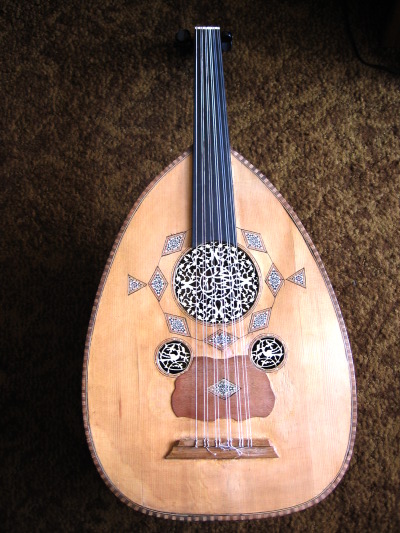
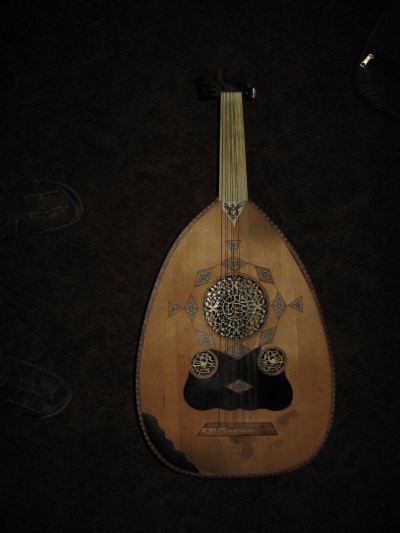
Pictures of the restored Nahat

Oud No Comments

Well. Do you remember the abused Nahat oud with the floor grade linoleum decoration glued on using epoxy?

Here’s a picture to remind you. Read the rest…

Nahat Repair, Prgress Report 2

Music, Oud No Comments

I had to put this project down for a few days as I was a bit under the weather. I am back on it.

I put the oud together, strung it, worked on the pegs. Played it. The tone is beautiful.. It is well rounded, clear, a bit dark, a bit frothy, just the way I like a oud to sound.

The bridge, as with my other Georgy Hanna Nahat is a little low. I was advised to make it higher to make the fingerboard work easier. I didn’t do that because that is certain to change the tone. I could have chosen a thinner pick guard wood which would have given me more play. But it’s on now, and I am not going to touch it. I will make minor adjustments to the way I play, if necessary.

Read the rest…

Restoring the Nahat, progress report.

Oud No Comments

Today is the big day. Come this evening, I will be playing this Nahat.

The new nut is already attached. It’s made of bone.

The fingerboard is ready to be attached. I ended up doing a little more plaining and smoothing in order to be able to lay the new fingerboard on top of the old one. I had originally intended to remove the old one, but decided against it because I was afraid of causing damage since the old fingerboard is attached so solidly, and I am not exactly an expert. The new ebony fingerboard is smooth as glass. I might need to do some more plaining if it buzzes. Extra careful measurements and calculations has resulted in a deliciously low action. But I will know for sure once I glue the fingerboard whether I can keep the low action or I might have to sacrifice some of it to prevent buzzing.

Read the rest…

Definitions, definitions. Arabic (and other) musical terms in 15 words or less.

Arabic Music, Music, Oud, Taqasim No Comments

As I work on restoring the Nahat for hours on end (so far a few hours each day for the past two weeks), I have had time to think strange thoughts (try planing wood continuously and very carefully for an hour as a catalyst for strange brain activity). One interesting theme: How few words does it take to define something?

By the way. I didn’t count prepositions, “or” or “and” and neither should you.

MUSIC THEORY TERMS

  • Arabic Maqam: Tonalmode consisting of one or more scales and rules governing melodic progression and cadences
  • Maqamat: Plural of Maqam

Read the rest…

Restoring a Nahhat

Music, Oud No Comments

This is a 1955 Georgi Hanna Nahat oud which I inherited about three years ago. It was sitting in a late friend’s storage who had rescued it years earlier from someones garage. I don’t remember the exact story but the oud was severely abused when Mimi found it and she kept it with the hopes of one day restoring it. She passed away before she had a chance to do that (may she rest in peace). Read the rest…

On doing our real best

Music, Oud No Comments

Practicing, studying with a great teacher of our instrument, studying music in general (theory, ear training, analysis), and listening to a lot of good music all the time, are the sure ways to improve the music we make.

Studying, practicing, and listening are activities that bring tremendous benefits to us from the outside. In this essay I would like to explore factors from within and that are within our control at any given moment, that limit our performance abilities.

Here are a few questions that are valid at any stage in our development as musicians.

  1. Are we, at any given moment, playing the best music we can play?
  2. Are we using all the skills that we already have or just a small fraction of them?
  3. If not, how can we at any given moment produce the best music we can produce?

Read the rest…

The Enchanting Qanun, and a few other CDs for your listening library

Arabic Music, Music, Oud, Taqasim No Comments

I am listening to ” Le Qanun Enchante’ “under the “Club Du Disque Arabe” label. This is probably the best thing one can do on a gloomy San Francisco morning. The first five tracks sound like the Mediterranean sun. The last two like Cairo summer evenings. Every track a masterpiece.

I was noticing that the post “As The Hard Times Hit” is quite popular. Another reason for listening to that CD. Music is flexing its muscles against the forces of nature and modern life, and it is winning. At least for now..

I continue to break the geographic and chronological order of the repertoire series and would like to recommend a few other CDs for a day like this:

Read the rest…

Classical Arabic Oud Player’s Repertoire (part 6)

Arabic Music, Music, Oud, Taqasim No Comments

Until now, in the first 5 parts in this series we discussed what is called “Urban / Classical twentieth century Egyptian music”. This was one of the central currents in Arabic music and has had an effect on the music in most of the Arab world through out the twentieth century. Today we conclude the Egyptian list. In the coming posts we move east and west from Egypt. Read the rest…

Classical Arabic Oud Player’s Repertoire (part 4)

Arabic Music, Music, Oud, Taqasim No Comments

Farid El-Atrash (also spelled Atrache)

For the oud player, Farid is someone who needs to be learned thoroughly. Listening to his recordings, watching videos of his playing, and, no less importantly, knowing his life. Read the rest…

« Previous Entries